

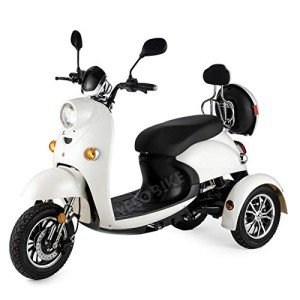
Zt16 Mobility Scooter
Add a review FollowOverview
-
Founded Date February 19, 1968
-
Sectors Sales & Marketing
-
Posted Jobs 0
-
Viewed 11

Company Description
Guide To Velco: The Intermediate Guide To Velco
Velcro: A Revolutionary Fastening Solution
Intro
Velcro, a name that has actually nearly ended up being associated with hook-and-loop fasteners, has changed the method we consider attaching materials. Often a staple in various industries and families, Velcro offers a basic yet efficient option to protect objects without the requirement for buckles, buttons, or zippers. This short article digs into the origins, systems, applications, and benefits of Velcro as well as addressing some frequently asked concerns.
The Origins of Velcro
Velcro was created in the late 1940s by Swiss engineer George de Mestral. After a hunting trip in the Alps, Mestral ended up being amazed by the burrs that adhered to his pet dog’s fur. Upon closer evaluation, he realized they worked through a system of tiny hooks that captured anything with a loop, including fabric and fur. Acknowledging the potential of this natural fastening system, Mestral embarked on a journey to recreate it in a synthetic type. By 1955, he had patented his development, branding it “Velcro,” a mix of the French words “velours” (velvet) and “crochet” (hook).
How Velcro Works
Velcro consists of two separate pieces: a hook side and a loop side. These 2 elements interlock when pressed together, developing a strong bond that can be quickly launched with a basic pull. The functioning of Velcro can be broken down into these primary parts:
| Component | Description |
|---|---|
| Hook Side | This side includes small hooks that capture and keep loops. |
| Loop Side | This side consists of soft loops designed to accept hooks when contacted. |
System of Fastening
- Interlocking: The hooks on one side capture the loops on the other, producing a physical interlock.
- Strength: The number of hooks and loops ensures a considerable holding strength, making it suitable for both light and sturdy applications.
- Relieve of Use: Velcro can be disengaged and re-engaged numerous times without losing its effectiveness, setting it apart from more conventional attachment methods.
Applications of Velcro
Velcro has actually discovered application across a myriad of sectors, consisting of:
-
Fashion Industry
- Sportswear
- Shoes (especially children’s shoes)
- Accessories (belts, bags)
-
Medical Field
- Orthopedic gadgets
- Bandages
- Prosthetics
-
Automotive and Aerospace
- Seat covers
- Interior linings
- Security equipment
-
Family Items
- Curtains
- Rugs
- Organizers
-
Industrial Use
- Cabling
- Devices attaching
- Tools storage
Advantages of Velcro
The appeal of Velcro can be credited to several benefits it uses over traditional attaching methods:
- Quick and Easy to Use: No tools are needed, making it easy to use.
- Flexible: Works on different surfaces and materials.
- Adjustable: Allows for simple modification in size (e.g., straps).
- Long lasting: Holds up under recurring usage.
- Washable: Maintains its function even after cleaning.
Potential Drawbacks
While Velcro is beneficial in lots of contexts, velco (https://www.necolewreede.top/health/veleco-mobility-scooters-in-the-uk-a-comprehensive-guide) there are some restrictions to be knowledgeable about:
- Noise: The sound of Velcro being pulled apart can be loud in quiet settings.
- Wear and Tear: Over time, extreme use may result in fraying or reduced efficiency.
- Limitations with Heavy Loads: While it can hold significant weight, it might not appropriate for very heavy products.
Frequently asked questions about Velcro
1. Is Velcro waterproof?
Yes, Velcro can be made from waterproof products, making it ideal for outside and marine applications.
2. Can Velcro be recycled?
Definitely! Velcro is developed for duplicated use, and numerous items can be resealed and opened several times.
3. How do you clean Velcro?
Cleaning Velcro is easy. You can use a lint roller or a soft brush to get rid of particles. For persistent dirt, it might be washed carefully with water.
4. Is Velcro strong enough to replace zippers?
In numerous applications, yes, Velcro can effectively change zippers, particularly in circumstances where quick fastening and loosening are needed.
5. Exist different kinds of Velcro?
Yes, there are numerous types, including varying widths, colors, adhesive strengths, and materials designed for various applications (i.e., high-temperature, outside, and so on).
Velcro has shown to be a versatile and innovative attaching service that has penetrated several sectors, enhancing both daily life and commercial applications. Its capability to provide a trusted and easy-to-use approach of attaching makes it an enduring part of modern-day design. From casual garments to innovative medical applications, Velcro continues to support its credibility as a staple attachment method for countless uses. Whether it’s for the fashion lover or a professional in the medical field, Velcro stays an unsung hero on the planet of attaching technology.
By transforming how we connect and secure products, Velcro is a testimony to the power of innovative thinking and simplicity in style. As innovation advances, we can just anticipate much more innovative applications for this amazing creation in the future.
